What if the world’s most trusted store of value wasn’t a vault asset, but a chronograph on your wrist? The Rolex Daytona has done what few luxury objects ever achieve: it has turned design, scarcity, and mechanical credibility into a durable preservation of capital.
Its strength is not driven by hype alone. The Daytona’s architecture-its case proportions, movement integrity, production discipline, and instantly legible identity-creates a foundation that collectors and investors recognize across generations and market cycles.
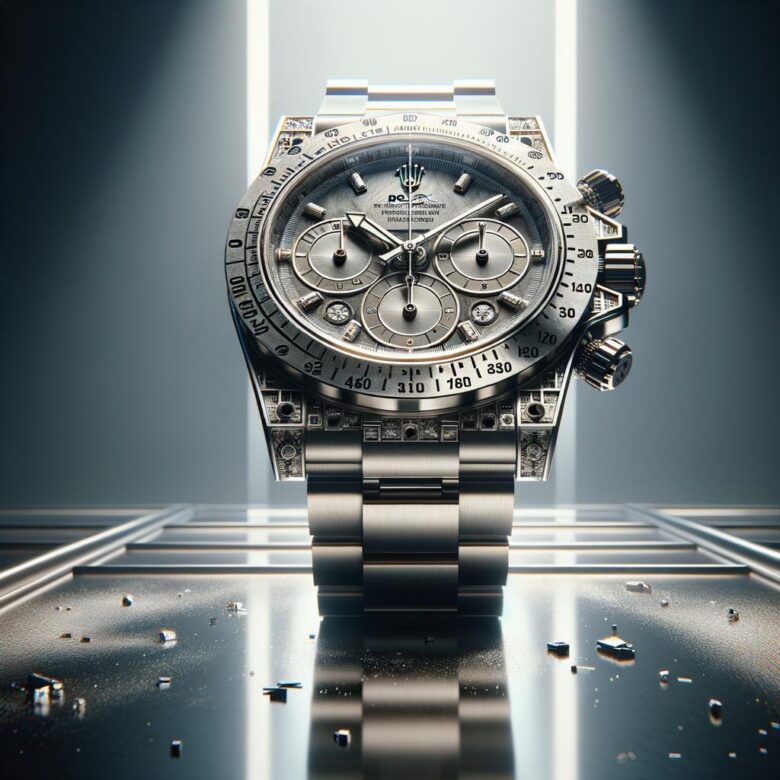
Unlike trend-driven watches that rise quickly and fade just as fast, the Daytona is built on structural desirability. Every major component, from the tachymeter bezel to the compact racing dial layout, reinforces a model language that Rolex has refined without diluting.
That is why the Daytona remains the benchmark in asset preservation within horology. It is not merely expensive or famous; it is engineered to hold cultural relevance, liquidity, and value with unusual consistency.
What Makes Rolex Daytona Architecture a Benchmark for Long-Term Asset Preservation
What turns a Daytona from a luxury object into a preservation-grade asset? It comes down to architecture, not just branding. The model sits at the intersection of controlled production, slow design evolution, and a reference system that lets buyers trace value with unusual precision across eras.
That matters in practice. When a collector evaluates a 116500LN against a newer 126500LN on Chrono24, the decision is rarely emotional alone; the architecture of the line makes comparison clean. Case proportions, bezel material, dial execution, bracelet generation, and movement family all create identifiable value layers, so pricing tends to stay anchored instead of drifting into guesswork.
- Reference continuity: Rolex changes the Daytona carefully, which preserves recognizability and reduces obsolescence risk.
- Component hierarchy: Certain details-ceramic bezel, dial layout, clasp code, movement update-carry durable pricing significance because the market has learned how to read them.
- Liquidity structure: There is a deep buyer pool for steel Daytonas, especially full-set examples, which supports exit flexibility in a way many niche watches cannot match.
A quick observation from the secondary market: the spread between “excellent, complete” and “watch only, polished” can be wider than inexperienced buyers expect. Small things. Original warranty card, untouched lugs, and period-correct bracelet links often matter more than a casual owner assumes, and that is exactly what benchmark architecture looks like-details that remain legible years later.
Use WatchCharts or auction archives to study how specific references behave over five- to ten-year windows, not just peak-cycle moments. The Daytona’s strength is that its value framework is inspectable; if you cannot map the reference, condition, and completeness clearly, you are not really buying the architecture that preserves value.
How to Evaluate Daytona Design, Movement, and Market Signals Before Buying for Value Retention
What should you check first when a Daytona looks “right”? Not the dial color-the case architecture tells you more about value retention. Compare lug thickness, bezel crispness, pusher definition, and caseback geometry against known examples on WatchCharts, dealer archives, and auction photos; over-polishing erodes collectability faster than many buyers realize, especially on five-digit references where original edges matter.
- Study the design details that separate normal wear from value loss: soft crown guards, washed tachymeter numerals, relumed plots, or service hands that don’t match period-correct lume tone.
- Verify the movement through paperwork, service history, and timing behavior; a Zenith-based 4030 should not be assessed the same way as an in-house 4130, because parts access, service intervals, and buyer demand differ.
- Read market signals through spread, not headline price: compare asking prices, actual transaction data on Chrono24, and how long similar watches sit unsold.
Short version: buy the best watch, not the cheapest entry point.
I have seen buyers overpay for “full set” examples with mediocre cases, then struggle at resale because seasoned collectors spotted service bezels and rounded lugs immediately. In one recent scenario, a cleaner no-box 116520 sold faster than a boxed example priced similarly, simply because the dial, bracelet stretch, and bezel condition were stronger.
One quick observation from the trade side: papers can lift confidence, but they do not rescue a compromised watch. If a seller cannot provide movement photos, recent service invoices, or clear macro shots under neutral light, slow down-Daytona value is usually preserved in the details buyers inspect last, not first.
Common Investor Mistakes That Undermine Rolex Daytona Resale Strength and Preservation Potential
Most resale damage happens before the watch ever goes on the wrist. Buyers stretch for a Daytona at the top of the cycle, then discover too late that overpaying on an incomplete set narrows the exit pool fast. A watch missing the warranty card, bezel protector history, or even the correct hang tags will still sell, but usually to a harder-nosed buyer who prices in future friction.
One mistake stands out: treating polishing as harmless routine maintenance. It isn’t. On Daytona references, softening the case chamfers, rounding the lugs, or over-cleaning the bracelet can erase the crisp geometry collectors pay for. I have seen owners spend money at a local jeweler to “freshen up” a watch, only to lose more on resale than the service cost itself.
- Skipping condition documentation: use dated macro photos, service invoices, and serial/reference records, then archive them in Chrono24 or a private inventory file.
- Using non-Rolex parts after damage: an aftermarket crystal or bezel insert may look acceptable online, but it gets flagged instantly during serious buyer review.
- Ignoring bracelet wear: stretch, clasp fatigue, and over-sized removed links affect both presentation and fit confidence for the next buyer.
Small thing. Big consequence.
And then there’s storage. A Daytona left in a humid safe with loose paperwork, or worn while doing desk-heavy work without thought to clasp and caseback abrasion, starts to show “honest wear” in places buyers inspect first. Funny enough, some owners obsess over timekeeping and forget the box corners, booklets, and even the white serial tag-yet those details often decide whether an offer comes in strong or cautious.
A real example: a buyer comparing two near-identical steel Daytonas on WatchCharts will usually choose the one with untouched lines, full accessories, and clean service provenance, even at a premium. Preservation is not just about the watch; it is about reducing reasons for the next buyer to hesitate.
Summary of Recommendations
Ultimately, the Rolex Daytona’s architecture matters because it turns desirability into durability-not just on the wrist, but on the balance sheet. For buyers focused on asset preservation, the key is not chasing hype, but choosing examples with the strongest long-term fundamentals: originality, condition, documented provenance, and configurations with proven collector demand.
- Buy the best-documented example you can afford.
- Prioritize untouched condition over short-term bargains.
- Think in decades, not seasonal price swings.
In practical terms, the Daytona remains a benchmark because its value is supported by structure, scarcity, and sustained market confidence-precisely the combination serious collectors should seek.

Dr. Alistair Sterling is a leading economist and consultant specializing in alternative asset markets. With a PhD in Financial Economics, he has dedicated his career to analyzing the intersection of market volatility and tangible assets. As the founder of Bidphoria, Dr. Sterling provides collectors with the data-driven insights needed to transform passion into a sophisticated investment portfolio