
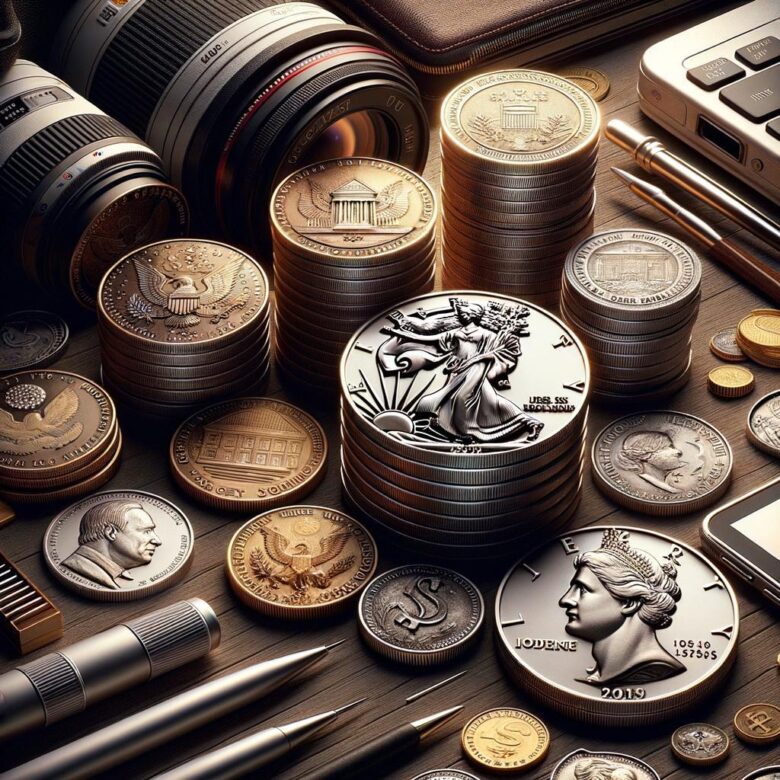
What if one of the most resilient long-term assets in a portfolio could fit in the palm of your hand? High-value rare coins occupy a distinctive place between hard-asset security, historical scarcity, and global collector demand.
Unlike conventional alternatives, elite rare coins are not driven solely by bullion prices or short-term market sentiment. Their value can also reflect rarity, condition, provenance, and the steady appetite of serious collectors across economic cycles.
For investors focused on diversification, selected numismatic holdings may offer a hedge against currency risk, financial volatility, and the concentration problems of traditional portfolios. The key is not owning more coins, but owning the right coins with lasting market depth and institutional-grade appeal.
This article examines the high-value rare coins most worth considering for a long-term strategy, along with the criteria that separate enduring stores of value from speculative purchases. In a market where quality matters more than quantity, selectivity is the investment edge.
What Makes Rare Coins a High-Value Asset in a Diversified Long-Term Portfolio
What gives rare coins real portfolio value isn’t just scarcity. It’s the combination of tangible ownership, a separate pricing ecosystem, and multiple layers of demand: metal content, historical importance, condition rarity, and collector competition. That matters when traditional assets move in lockstep, because a properly selected coin can be supported by more than one market at the same time.
In practice, high-end coins often behave differently from bullion and differently from equities. A key-date Saint-Gaudens double eagle, for example, may rise because advanced collectors are chasing registry-quality pieces even when spot gold is flat; that is a very different driver from a mining stock or ETF. Serious buyers track auction records through Heritage Auctions and certify marketability through PCGS or NGC, which helps turn a niche collectible into a more legible asset.
Three factors usually separate a coin from a mere collectible:
- Restricted supply that cannot be expanded, especially in upper grades.
- Transparent comparables through public auction archives and population reports.
- Global buyer interest, which supports liquidity beyond a local dealer network.
One quick observation from the market: two coins with the same date and mint can trade worlds apart if one has CAC approval, cleaner surfaces, or stronger eye appeal. That gap surprises new investors, but it is exactly why rare coins can preserve premium value over long holding periods rather than tracking melt value alone.
Not every rare coin belongs in a diversified portfolio. The strongest candidates are those with established demand, third-party certification, and enough transaction history to price realistically; otherwise, “rare” can become expensive and hard to exit.
How to Evaluate and Select Investment-Grade Rare Coins for Long-Term Growth
Start with liquidity, not just rarity. A coin can be genuinely scarce and still be a poor long-term holding if the buyer pool is thin, the series is volatile, or pricing depends on one auction result that everyone keeps citing. In practice, I screen first for coins with deep trading history on PCGS CoinFacts and recent verified auction records on Heritage Auctions or Stack’s Bowers, then I look at the coin itself.
- Buy the best quality available within a sensible price band, not the cheapest example in a famous date. Original surfaces, stable color, and minimal distractions often outperform a technically similar coin with cleaning or dull eye appeal.
- Favor coins with certification from PCGS or NGC, then check population reports carefully; a low pop matters less if the issue is tightly held and seldom traded.
- Compare the same date across adjacent grades. Sometimes the smarter purchase is an underappreciated MS64 with strong eye appeal rather than stretching for a promoted MS65 where the premium is mostly label-driven.
A real example: two investors chase a key-date Saint-Gaudens double eagle. One buys a bright, over-dipped specimen because it is numerically higher; the other takes a slightly lower-graded coin with original luster and cleaner fields. Five years later, the second coin usually attracts stronger dealer bids. It happens more often than newcomers think.
One quick observation from shows: coins that “look expensive” under bourse lighting often look ordinary in hand the next morning. Slow down.
Before committing, ask for CAC status if relevant, review imaging at full resolution, and estimate your exit route today, not someday. If you cannot explain who will want the coin after you-and why-they probably won’t.
Common Rare Coin Investing Mistakes That Can Undermine Portfolio Performance
Most portfolio damage in rare coins does not come from buying the “wrong” series. It comes from overpaying for the wrong quality tier, usually because the buyer chases the label instead of the coin. A common example: paying a steep premium for a low-end MS65 Morgan dollar in a hot holder when a high-end MS64 with better luster and cleaner fields would have been easier to sell later.
Another costly mistake is treating price guides as executable market prices. They are not. Serious buyers cross-check recent auction archives on PCGS CoinFacts, NGC, and Heritage Auctions, then compare that data with dealer asking levels and CAC-approved examples; the spread often reveals whether demand is real or just retail optimism.
- Ignoring liquidity tiers: a six-figure trophy coin may impress, but a thin buyer pool can lock up capital for months.
- Building around one date or one metal cycle: concentration risk hits hard when that niche cools.
- Skipping verification of prior cleaning, putty, artificial toning, or old repairs, especially in raw coins and older holders.
One quick observation from the bourse floor: many investors spend more time on rarity narratives than on population drift. Pop reports change, hoards appear, crossover submissions increase, and a coin once viewed as elusive can become merely expensive. That matters.
Also, don’t neglect transaction friction. Buyer’s premiums, consignment fees, shipping, insurance, and grading resubmissions can quietly erase years of appreciation, particularly in mid-range material. If the exit path is not clear before the purchase, portfolio performance is already under pressure.
Final Thoughts on High-Value Rare Coins to Include in a Diversified Long-Term Portfolio
Rare coins can strengthen a long-term portfolio when they are treated as a disciplined allocation rather than a speculative centerpiece. The strongest candidates are pieces with proven demand, clear grading, strong provenance, and deep market liquidity. For most investors, the practical edge comes from being selective, buying quality over quantity, and matching purchases to a defined holding horizon.
The best decision framework is simple: focus on assets you can verify, insure, and realistically resell. If a coin does not meet those standards, it does not belong in a diversified strategy. In this market, patience, authentication, and pricing discipline matter more than chasing rarity alone.

Dr. Alistair Sterling is a leading economist and consultant specializing in alternative asset markets. With a PhD in Financial Economics, he has dedicated his career to analyzing the intersection of market volatility and tangible assets. As the founder of Bidphoria, Dr. Sterling provides collectors with the data-driven insights needed to transform passion into a sophisticated investment portfolio